
How Eating Plants Protects People and Planet
Environmental sustainability, Parkinson’s disease and cancer prevention in humans

Recent images of Earth captured during NASA’s Artemis missions offer a striking perspective.
From where we stand, the world can feel enormous. People, places, and problems often seem far removed from our own daily lives.
But when you step back and see Earth from a distance, that sense of separation starts to fall away. What once felt vast begins to look smaller. Contained. Shared.
A more distant perspective was captured decades ago by the Voyager 1 spacecraft, in the image Carl Sagan later described as the “Pale Blue Dot.”
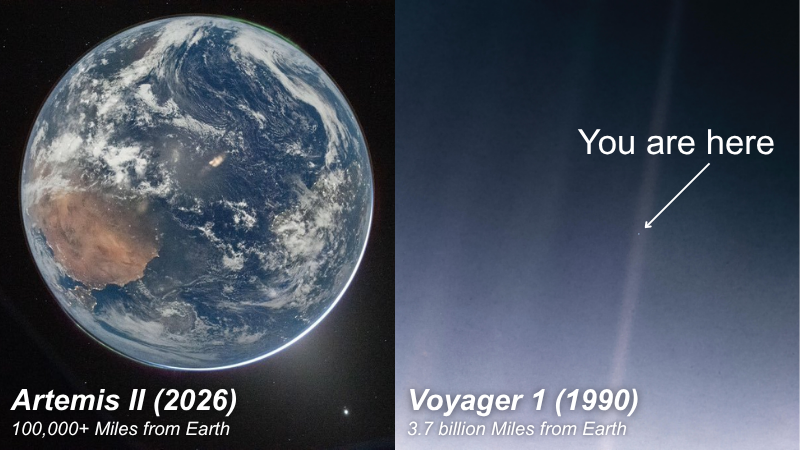
These images serve as a reminder that every person, every place, and every system we depend on exists within that single, connected space.
It’s less like a collection of distinct environments and more like a shared home. And just like in any home, what happens in one part doesn’t stay there for long. The air moves. Water flows. Systems overlap. Over time, those changes show up in the health of the people living inside it.
Environmental Factors and Brain Health
This new image comes just in time for Earth Month, which also happens to be Parkinson’s Disease Awareness Month. These may seem like separate conversations. But both are shaped, in part, by the same underlying lifestyle factors.
As research continues to evolve, that connection is becoming harder to ignore.
Ali Saad, MD explored this connection in his Lifestyle as Medicine lecture, Neurology in a Warming World.
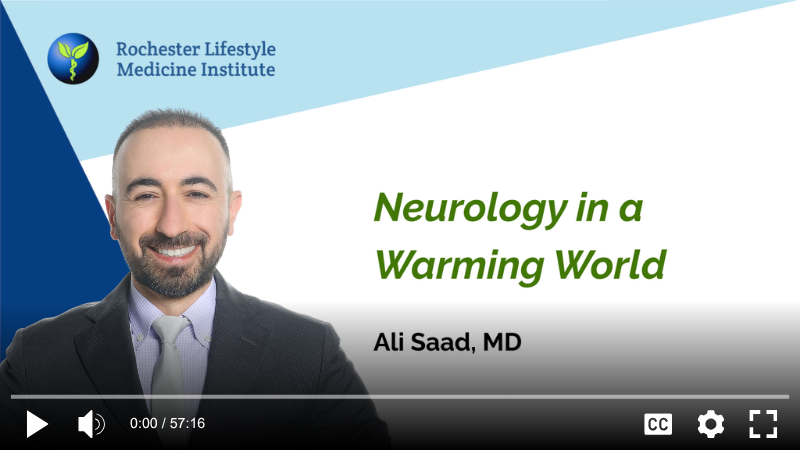
Watch Neurology in a Warming World now inside the RLMI Community. Not a subscriber? Try it free for 30 days - no credit card needed!
Dr. Saad’s talk highlighted a growing body of research linking environmental exposures to neurological conditions, including Parkinson’s disease.
While Parkinson’s is often thought of as primarily genetic, evidence suggests that factors such as air pollution, pesticide exposure, and broader environmental changes may play a meaningful role in both its development and progression.
“ The World Health Organization calls climate change, the top health threat of the 21st century.
In neurology, the most studied climate related environmental exposures to date are air pollution and extreme heat.”
Dr. Ali Saad, Co-Director of Neurologists Interested in Climate and Health
These environmental exposures are shaped by the systems we rely on every day, including how we move through the world, and how our food is produced.
Lifestyle Medicine and Parkinson’s
In a recent Lifestyle Medicine Grand Rounds, case presenter Dr. John Duda and guest panelist Dr. Rachel Dolhun discussed lifestyle interventions in patients living with Parkinson’s disease.
“Diet can really make a big difference—not only for easing symptoms, but also as a tool to work around them.”
-Dr. Rachel Dolhun, Double-board-certified neurology and lifestyle medicine physician
Nutrition plays an important role in supporting overall health, reducing inflammation, and helping patients better manage symptoms. But it also plays an indirect role.
As Dr. Saad emphasized in his lecture, the same dietary patterns that support human health are also the ones that reduce environmental strain:
“If you want to eat climate-healthy food, the number one thing is to eat mostly plant-based foods.”
A similar, dual effect shows up in other lifestyle factors as well.
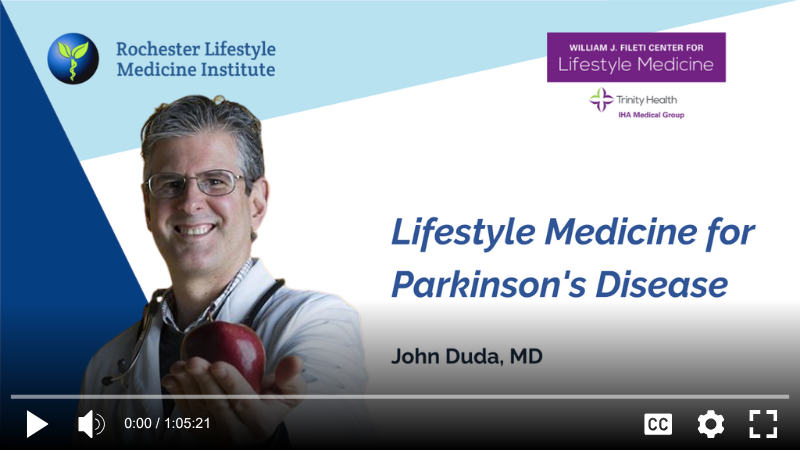
For example, physical activity has been shown to significantly influence the risk and progression of Parkinson’s disease.
“It’s almost malpractice if you don’t talk to your patients with Parkinson’s disease about exercise now.”
-Dr. John Duda, Movement disorders neurologist
At the same time, when movement is built into how we get around—through walking, biking, and other forms of active transportation—it reduces reliance on cars, a major source of air pollution. Thus, how we incorporate physical activity into daily life can also influence the environmental exposures linked to neurological conditions like Parkinson’s.
This demonstrates the need for systemic changes that promote more wide spread adoption of these health-promoting behaviors.
How Our Food Choices Impact Both Environmental and Human Health
Food is one of the most direct ways human behavior shapes the environment.
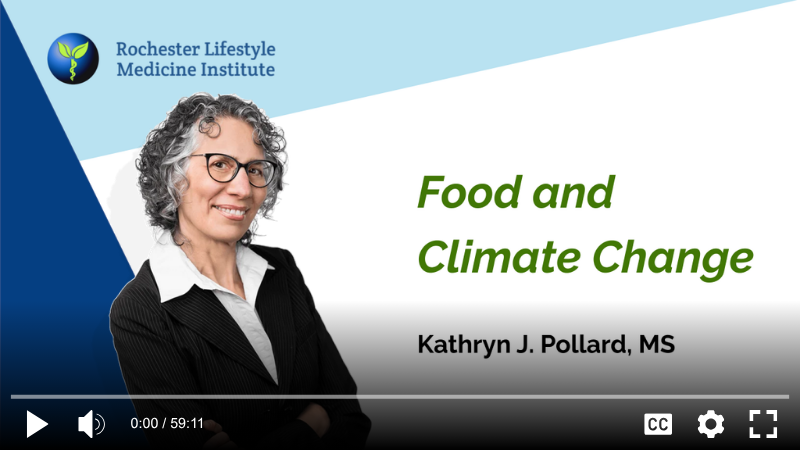
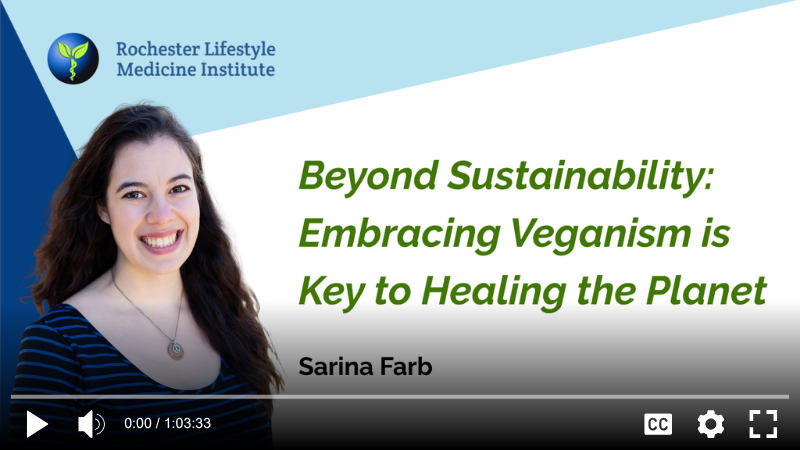
Together, these perspectives reinforce that our food system is not separate from our health. It is one of the primary ways we shape the conditions we live in. And those conditions have measurable health consequences.
Food Production, Environmental Exposure, and Disease Risk
The impact of these systems extends beyond brain health.
Recent research has found that communities with higher exposure to concentrated animal feeding operations (CAFOs) also experience higher rates of certain cancers.
These operations can release pollutants into the air and water, contributing to inflammation, respiratory illness, and potential carcinogenic exposure.
This broadens the conversation.
A shift toward whole-food plant-based eating does not only improve diet quality at the individual level, and mitigate environmental factors contributing to Parkinson’s Disease. It also helps reduce exposure to environmental risk factors that contribute to a range of chronic diseases.
Ready to Take the Next Step?
If you’re looking to put this into practice, RLMI offers structured, evidence-based support:
15-Day Whole-Food Plant-Based Jumpstart
A medically facilitated program designed to help you reset your habits and start seeing measurable results quickly.RLMI Community
Ongoing support, live meetings, expert lectures, and a network of people working toward the same goals.Lifestyle Medicine Lectures & Grand Rounds
Deep dives into the science behind prevention, chronic disease, and sustainable health.Resources for Medical Professionals
Tools, education, and referral pathways to help clinicians incorporate lifestyle medicine into practice and better support patients in making lasting change.
Lasting change doesn’t happen through individual action alone. The systems that shape our food, healthcare, and communities influence what choices are possible.
That’s why this work goes beyond personal habits. It includes how we practice medicine, educate patients, and create environments that make healthier choices easier.
When those pieces align, the impact extends far beyond any one individual.
